

New York, USA – October 21, 2025 —The recent AI Crypto Trading Showdown, spotlighted on Yahoo Finance, has captivated both Wall Street and retail investors alike. Major AI models—from DeepSeek to Grok and Gemini—were each given real capital to trade digital assets in real time. Within days, DeepSeek’s algorithm outperformed its peers, exposing a powerful yet unsettling truth: institutional AI is redefining the markets faster than humans can react.
But the real question is not which AI wins the next trade—it’s what happens to everyone else?
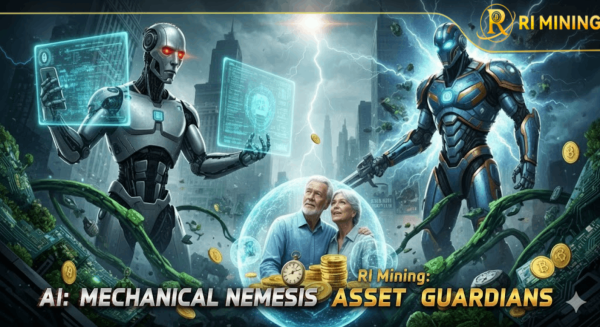
When AI Becomes the Market
As institutional desks deploy data-driven quant AI, ordinary investors face an invisible but growing gap.
Speed, infrastructure, and privileged data are now the deciding factors of profitability.
Retail participants—once the backbone of crypto’s democratized vision—are finding themselves out-matched, front-run, or quietly harvested by algorithmic liquidity strategies.
So, in an age where AI controls execution, pricing, and volatility, how can the average investor protect their assets from algorithmic erosion and whale-driven manipulation?
RI Mining: Turning AI from Competition into Collaboration
Instead of joining the arms race of milliseconds, RI Mining proposes an entirely different approach:
using AI not to trade the market, but to optimize the infrastructure that powers it.
Through its AI-optimized green cloud mining system, RI Mining allows users to earn daily yield from network capacity rather than order-book volatility.
This model converts idle crypto assets into productive computing power—without trading, speculation, or exposure to institutional front-running.
Core advantages include:
- AI-driven hashrate allocation: Smart algorithms redistribute computing resources in real time to maximize efficiency and stability.
- Sustainable operations: Data centers run on renewable energy sources—hydro, solar, and wind—ensuring a low-carbon footprint.
- Independent audit and assurance: Regular third-party security reviews, penetration tests, and data-integrity audits verify the safety of funds and operations without relying on regulatory labels.
- Transparent contracts & daily settlement: Each plan includes clear terms, auto-compounding options, and daily payouts in BTC, XRP, DOGE, or USDT.
The result: a stable, accessible path for global users to generate passive income—independent of market manipulation.
Simple 3-Step Onboarding
- Register at www.rimining.com and claim your $15 bonus.
- Deposit crypto (XRP, BTC, ETH, DOGE, USDT – starting from $100 or ≈30 XRP).
- Activate a contract — AI automatically allocates power; earnings arrive every 24 hours.
No installations. No complex configurations. Just passive income.
Contract Plans and Expected Returns
Contract Type
Deposit (USD)
Term (Days)
Daily Income
Total Revenue
Free Trial$151$0.6$15.6Experience$1002$4$108Basic$1,00010$15$1,150Intermediate$5,00015$85$6,275Advanced$10,00020$200$14,000Super AI Contract$23,00027 $690 $41,630
Example: A $23,000 contract over 27 days yields a 3 % daily return and total $41,630.
Click here to view more potential future returns (based on periodic differences in market value fluctuations)
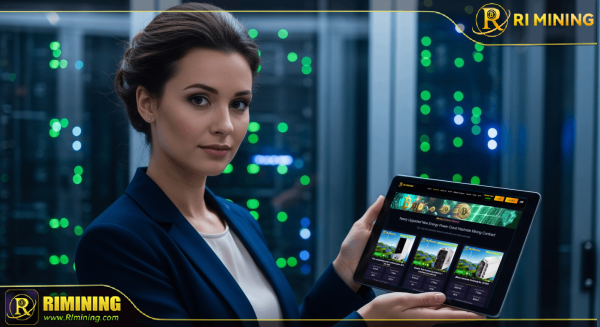
AI for Protection, Not Speculation
RI Mining’s philosophy flips the script on what AI means in crypto.
Instead of deploying models to out-trade others, the platform uses AI to safeguard earnings—monitoring system uptime, energy efficiency, and contract performance 24/7.
This shifts the role of artificial intelligence from “market predator” to “economic guardian.”
For new participants, the difference is profound: AI no longer decides your fate—it works for you.
A Realignment of Crypto Wealth
As AI quant funds centralize trading power, platforms like RI Mining help re-decentralize value creation.
By democratizing access to hashrate and energy-backed returns, they reaffirm crypto’s original promise: that anyone, anywhere, can participate and benefit without permission or privilege.
In this model:
- Energy becomes the new alpha.
- Efficiency is the new edge.
- Transparency is the new trust mechanism.
Looking Forward: The Future of Cloud Mining in the AI Era
The coming phase of digital finance will not be defined by trading speed alone—but by infrastructure intelligence.
Cloud mining is evolving into a network of autonomous energy nodes, where AI balances yield, sustainability, and security in real time.
RI Mining’s vision hints at a broader financial transition:
- From speculative profit to productive participation.
- From AI competition to AI-empowered co-ownership.
- From market extraction to energy-backed value creation.
In the next decade, this fusion of AI and clean energy may become the foundation for a truly decentralized economy—where profits flow from efficiency, not exploitation; and where ordinary users earn not by outsmarting algorithms but by owning a share of the infrastructure those algorithms depend on.
AI quant trading may win the speed war. But AI-driven green cloud mining may win the future of financial freedom.
www.RImining.com For more information, visit the official website
Official App: [Click here to download the mobile app]
Official email: info@RImining.com